

Table of Contents
Summary
In this article, you’ll discover how to differentiate the major, minor, and exotic forex pairs. We’ll explain the characteristics that define each group as unique. In addition, we’ll discuss the pros and cons of trading each group of pairs while determining which type of pairs might be right for you, whether you are a novice trader or looking to take your trading iosks to the next level.
Introduction
When discussing trading in the Forex market, you’ll notice the term forex pairs come up quite often. To explain forex pairs in broad terms, forex pairs are the two currencies that are traded against each other, for example, the EUR/USD (Euro versus U.S. Dollar). There is always one base currency and one quote currency. The value of the price will tell you how much of the first currency you need to buy one unit of the second currency.
If you want to trade with confidence, understanding the different forex pairs is one of the most important foundational steps. Why is that important? Because, pairs don’t all behave the same. Some pairs are more stable, some move quickly, others may have more risk or more potential reward. Knowing the characteristics of the right pair can help you make better trading decisions, manage your risk better, and select pairs which are set with your experience and goals.

What Are Forex Pairs?
In the foreign exchange market, currencies are never bought or sold in isolation, they are always presented in currency pairs. A currency pair indicates the value of one currency relative to another. So, when you buy and sell forex pairs you are buying one currency and simultaneously selling another currency.
Every currency pair has two parts:
- The base currency: This is the first currency in the pair.
- The quote currency: This is the second currency in the pair.
For example, let’s look at EUR/USD
- Here, EUR (Euro) is the base currency.
- USD (U.S. Dollar) is the quote currency.
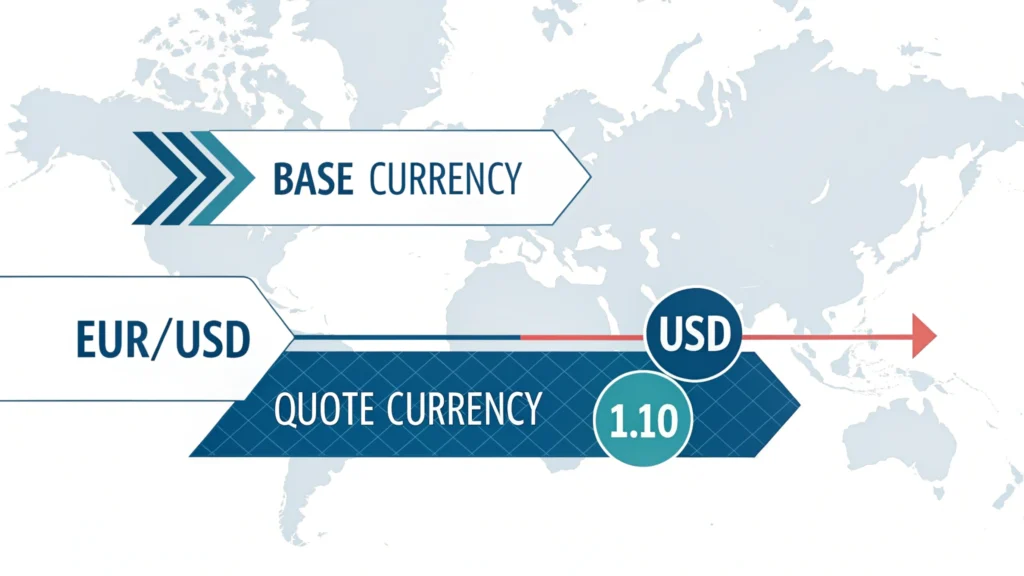
If the EUR/USD rate is 1.10, that means 1 Euro costs 1.10 U.S. Dollars. If the trader buys this pair, he buys Euros and sells Dollars. If he sells the pair, he sells Euros and buys Dollars.
Exchange rates are constantly in flux due to supply and demand, international events, and economic information – this is what creates trading opportunities. The more you understand how forex pairs operate, the easier it will be for you to read charts, identify trends, and make your trades with confidence.
Major Forex Pairs: The Global Heavyweights
When referring to major forex pairs, traders are speaking about the most widely known and traded currencies around the world. The pairs will always include the U.S. dollar (USD) and a strong currency from one of the world’s major economies such as the Euro, British Pound or Japanese Yen.
major forex pairs:
- EUR/USD – Euro vs. U.S. Dollar
- GBP/USD – British Pound vs. U.S. Dollar
- USD/JPY – U.S. Dollar vs. Japanese Yen
- USD/CHF – U.S. Dollar vs. Swiss Franc
- AUD/USD – Australian Dollar vs. U.S. Dollar
- USD/CAD – U.S. Dollar vs. Canadian Dollar
- NZD/USD – New Zealand Dollar vs. U.S. Dollar
These currency combinations are referred to as “majors” because they are the most widely traded currency pairs in the global forex market. Since the U.S. dollar is the most traded currency in the world, these pairs will tend to have high liquidity (many buyers and sellers), low spreads (small differences between the buying and selling price), and consistent price movement.
For beginners, major forex pairs are an excellent option to begin with. They are typically more stable, easier to analyze, comport with much historical data, and have more predictable prices. Major forex pairs react clearly to major news and economic events, allowing the trader to learn patterns and develop strategies more quickly.
Minor Forex Pairs: The Cross-Currency Connections
Minor currency pairs, which are also referred to as cross-currency pairs or simply “crosses,” are currency pairs that exclude the U.S. dollar (USD). Rather, the pairs highlight the direct comparison two other major world currencies to each other.
Some common examples of minor pairs:
- EUR/GBP – Euro vs. British Pound
- AUD/NZD – Australian Dollar vs. New Zealand Dollar
- GBP/JPY – British Pound vs. Japanese Yen
Minor pairs are interesting since they have movements that tend to be less impacted by the U.S. economy. It often creates an opportunity for trading that is unique especially when two regions (example: Europe and the U.K.) are showing differing economic trends.
These pairs typically have a higher level of volatility; which means prices can move more rapidly and further in a shorter amount of time. This higher level of volatility can mean for an experienced trader that they may have more opportunities to profit.
However, there are some things to consider. Minor forex pairs usually have lower liquidity (less trades occurring at the same time) and have a higher spread (the difference between buying and selling price). This makes these trades a tad riskier, and possibly more expensive.
Exotic Forex Pairs: The Risky but Rewarding Choices
Exotic forex pairs consist of one major currency (the U.S. dollar or Euro, for example) and one currency from a smaller or emerging economy. Exotic forex pairs in a way bridges major global markets with emerging ones that brings exciting possibilities and sometimes unexpected conditions for trading.
examples of exotic forex pairs:
- USD/TRY – U.S. Dollar vs. Turkish Lira
- EUR/ZAR – Euro vs. South African Rand
- USD/SGD – U.S. Dollar vs. Singapore Dollar
Exotic pairs are fun because they usually see large price movements. When political or economic changes happen in these smaller countries quickly, so does the value of the currency, and this can create a high profit margin for traders that catch the right pricing move.
On the other hand, this does come with the tradeoff of low liquidity, meaning there are fewer traders buying and selling these pairs, and with wide spreads, so entering in and exiting out of trades is more expensive. Higher risk is also a characteristic of lower liquidity pairs as prices can jump suddenly because of news or market reactions.
As a result, exotic currency pairs are usually better suited to more experienced traders who know how to manage risk on your trades and have had sufficient practice analyzing the market trends. For beginners, using these pairs can be too unpredictable, but they can explore these pairs down the line once they have become comfortable trading majors and minors.
Key Differences at a Glance
| Type of Pair | Includes USD? | Liquidity | Volatility | Common Examples |
|---|---|---|---|---|
| Major | Yes | Very High | Moderate | EUR/USD, GBP/USD |
| Minor | No | Medium | Higher | EUR/GBP, AUD/NZD |
| Exotic | Sometimes | Low | Very High | USD/TRY, EUR/ZAR |
Which Type of Forex Pair Should You Trade?
Now that you have a firm understanding of major, minor, and exotic forex pairs, you most likely are asking yourself; which ones should I trade? The answer is contingent on how experienced you are, your goals, and how comfortable you are with risk.
If you’re new to trading, start with major forex pairs. They are the most consistent pairs, have abundant information readily available online, and tend to move in a more predictable manner. Beginning with the EUR/USD or GBP/USD is easier to analyze, and the costs of trading major pairs are lower.
For intermediate traders that have some experience in trading, you may want to test the minor pairs such as EUR/GBP or AUD/NZD. Minor pairs don’t involve the U.S. dollar which means they respond differently to economic or global events and may provide new trading opportunities. Minor pairs can be a little more volatile and typically have wider spreads.
For traders with strong confidence in their analysis and risk management skills, engaging with exotic forex pairs is a fun challenge. Exotic pairs tend to produce larger price swings and can have big rewards, but they also introduce larger risk into the trading environment. Exotic pairs should only be considered for traders who have developed strong trading strategies and have experience with great volatility.
Regardless of where you are in your trading journey, you should bear in mind: every kind of forex pair has a different trading tactic and risk tolerance. Give yourself time to learn the behavior of each forex pair and don’t feel obliged to trade live straight away. It is always a good idea to try it out in a demo account first – there are numerous benefits to do so, such as developing skills and strategies while giving you an understanding without the risk of using real funds.
Final Thoughts
Understanding the gaps between major, minor, and exotic forex pairs is a large step towards being a trustworthy trader. Each pairs has its own rhythm – majors are reliable and beginner friendly, minors are diversified with less volatility, and exotics offer high risk but fun opportunities.
The most important thing is to do so with patience and knowledge. Don’t take on more difficult pairs until you are confident with the fundamentals first, then take your time to expand your strategy as you gain more experience. Please remember that being a successful trader does not come down to guessing; it means you can start to know how and why the market moves, and you can make an informed decision each time you enter a trade.
If you’re interested in continuing to learn, grow, and connect with traders who have similar goals as you, join us at SmartTradeCommunity. It is a community of traders at all levels that learn, share strategies and build confidence in their trading, one step at a time.